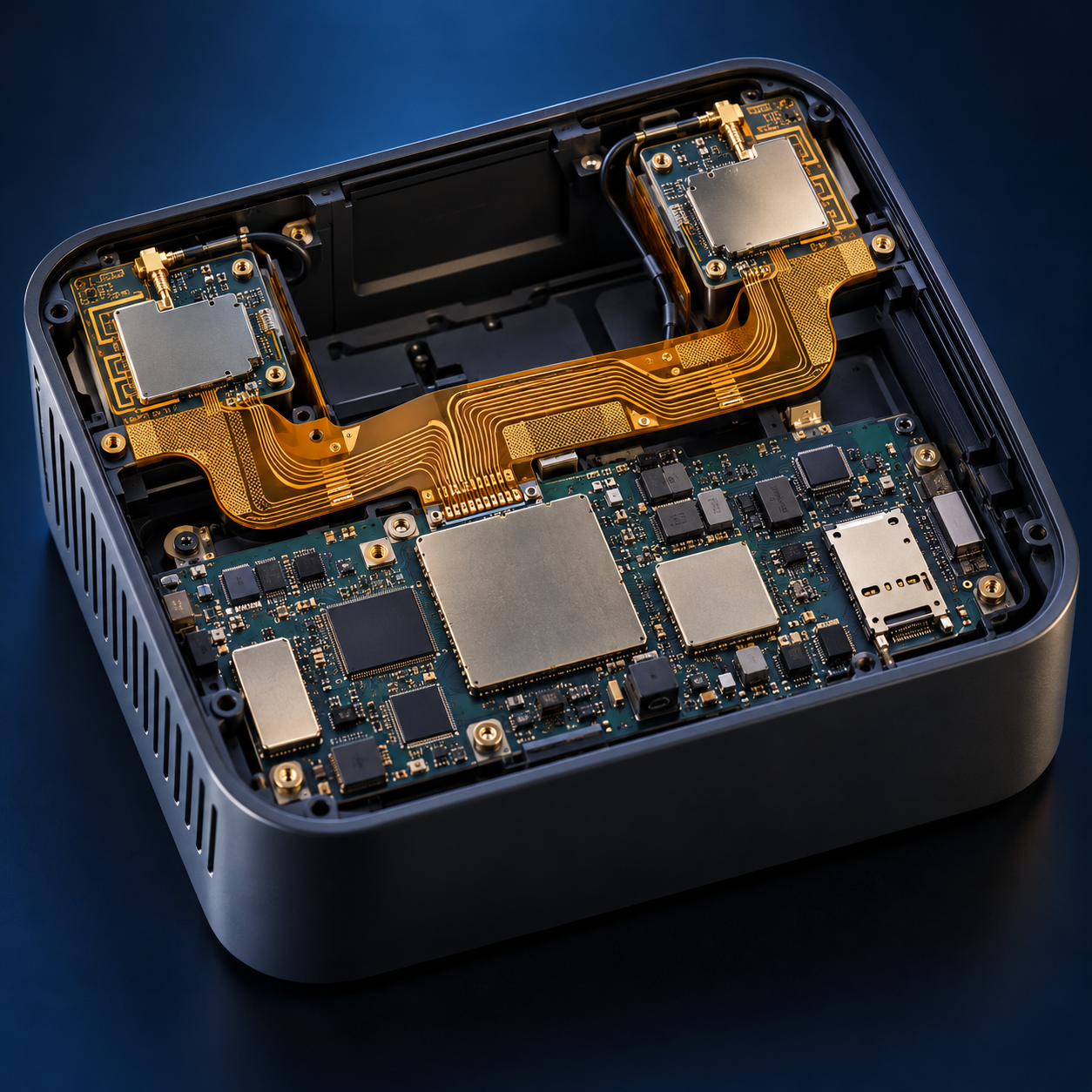
LCP Flex Circuits
Material and design options for high-frequency interconnects
Liquid crystal polymer (LCP) gives designers another material option for flexible circuits used in RF and high-speed signal paths. The right construction depends on electrical performance, circuit geometry, bending and assembly conditions, and the requirements of the finished product.
Flex Circuit Solutions supports material selection, stack-up development, DFM, quoting, and program coordination. As CMI’s exclusive North American commercial and engineering interface, we connect local customer support with CMI’s flexible circuit manufacturing and high-frequency engineering capabilities.
Have an LCP flex design or high-frequency interconnect to review?
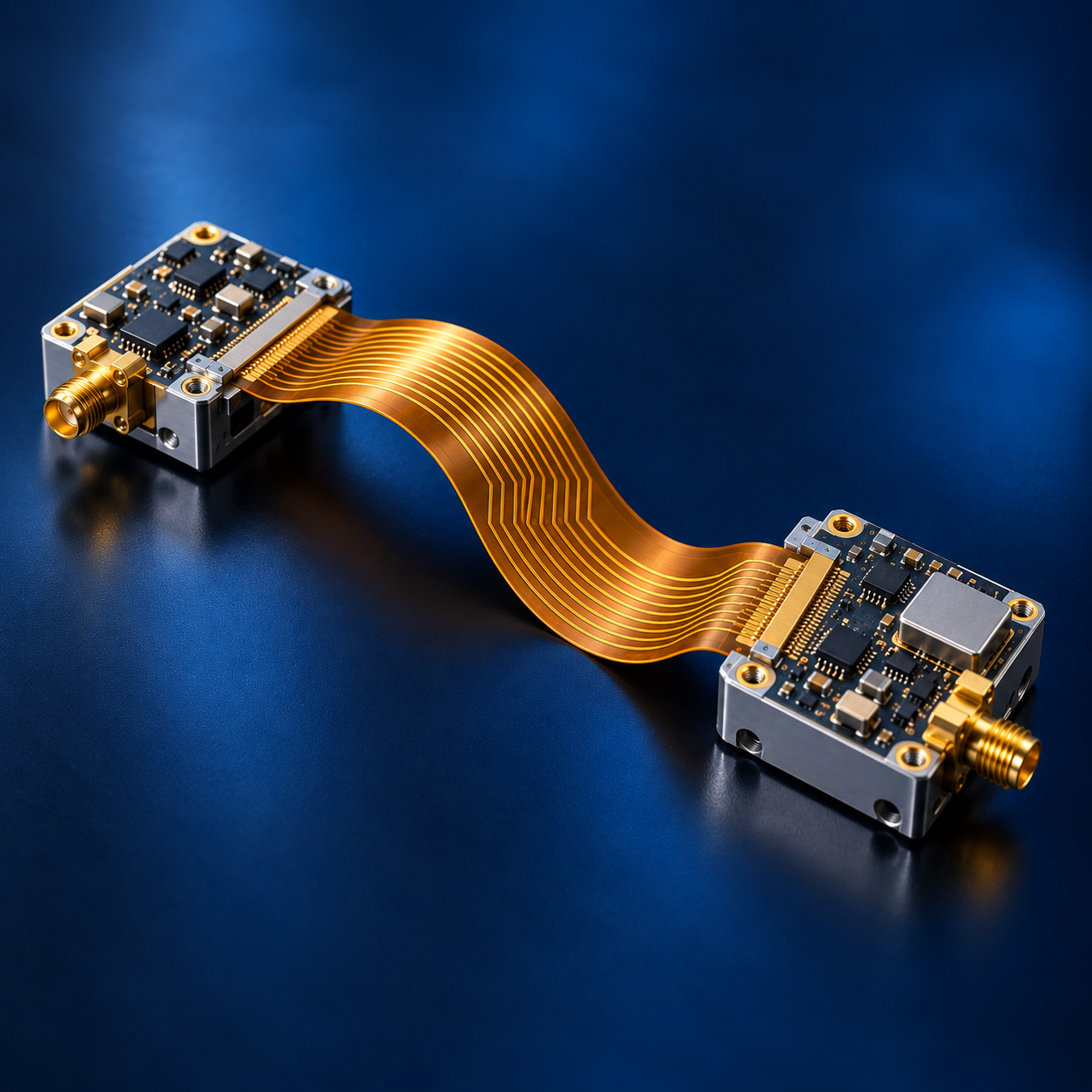

Design, Simulation & Measurement
Selecting an LCP construction involves more than choosing a dielectric. CMI can evaluate material properties, layer arrangement, copper geometry, and impedance targets using 3D electromagnetic simulation with Ansys. This helps the engineering team compare proposed stack-ups and identify changes before building prototypes.
After fabrication, CMI can use vector network analyzer (VNA) and high-frequency probe-station measurements to evaluate signal performance and compare measured results with the design model. The findings can guide adjustments to the stack-up, trace design, or manufacturing approach as the project moves toward qualification and production.
FCS coordinates this work with customers in North America, keeping the electrical targets, mechanical requirements, DFM feedback, and test results connected throughout development.
LCP Flex Applications We Support
LCP constructions can be considered for products where RF performance, high-speed signals, and compact routing must work together. Examples include:
5G hotspots and wireless routers: Flexible connections between modem-RF circuitry, antenna modules, and other components within a compact enclosure.
Fixed wireless and connectivity equipment: RF and high-speed interconnects in gateways, receivers, and network devices where packaging and signal routing are closely linked.
Antenna and RF modules: Custom flex and antenna constructions that require controlled impedance and careful attention to signal loss.
High-speed electronic systems: Flexible signal paths between boards, modules, displays, and other components within a constrained layout.
Aerospace, defense, and UAV systems: Flexible RF and antenna interconnects for onboard communications, navigation, sensing, and data links, subject to each program’s sourcing and qualification requirements.
Medical, automotive, and industrial devices: Application-specific interconnects where wireless communication, sensing, imaging, or high-speed data transmission adds to the mechanical design challenge.
The material and stack-up are selected for the actual signal and mechanical requirements. FCS and CMI can compare LCP, polyimide, and hybrid constructions through design review, simulation, prototype builds, and measurement before settling on a production approach.